Tour overview
A private day in Scotland
The provisional main-stop order follows the confirmed migration decision: Kilmahog and the Highland cows, Loch Tulla, Glencoe viewpoints, the Meeting of Three Waters, the Three Sisters, Fort Augustus and Loch Ness, Laggan Dam, Blair Castle, Pitlochry, and the Forth Bridges at South Queensferry. Central Scotland landmarks may be mentioned only as sights seen along the route, not as confirmed visits.
At a glance
- Duration: 12 hours
- Group size: Up to 7 passengers
- Private transport: Comfortable private transport suitable for your group.
Edinburgh → Kilmahog → Loch Tulla Viewpoint → Glencoe Valley viewpoint → Meeting of Three Waters → Three Sisters of Glencoe → Fort Augustus and Loch Ness → Laggan Dam → Blair Castle → Pitlochry → Forth Bridges → Edinburgh
Your route
Itinerary
Open a stop for practical visit details.
Kilmahog sits at the gateway to the Trossachs, where wooded hills and open farmland begin to replace the city landscape. The stop is closely associated with the nearby Trossachs Woollen Mill, a long-established place for Scottish knitwear, tartan and gifts.
Highland cattle are one of the memorable sights of this area. Their long coats and broad horns have made them an enduring symbol of rural Scotland, and the stop offers a gentle introduction to the landscapes ahead. There is time to stretch your legs, take photographs and browse independently before the route continues north.
Highland cattle sightings and access cannot be guaranteed. Please follow any notices at the location; feeding or touching animals is not promised.
Loch Tulla lies at the western edge of Rannoch Moor, a vast sweep of peatland, water and low vegetation between the Trossachs and Glencoe. The viewpoint opens out across the loch towards hills that can look entirely different as the light changes.
It is a useful first sense of Highland scale: open moorland, scattered lochans and long horizons rather than the enclosed glens to come. This is a short photography and scenery stop, with time to step out and take in the setting.
Highland weather and visibility can change quickly, so the view and conditions on the day may vary.
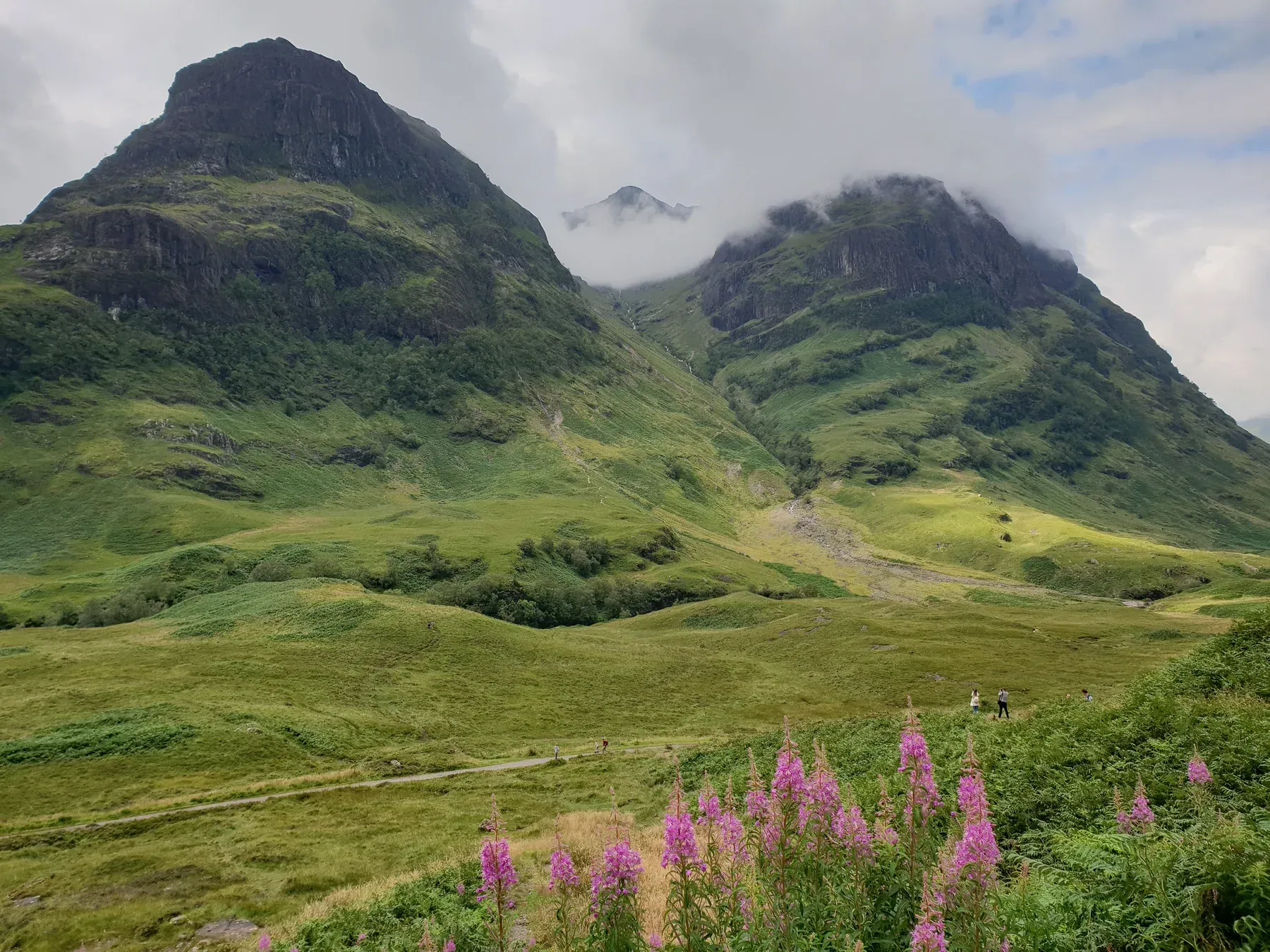
Glencoe is one of Scotland's most recognisable Highland landscapes. Its broad valley was shaped by volcanic activity and later glaciers, leaving steep ridges, dark rock faces and a dramatic sense of enclosure.
The glen is also associated with the Massacre of Glencoe in 1692, a tragic episode in Scottish history that gives the landscape an added historical resonance. From a suitable roadside viewpoint, you can take photographs and see how the mountains, burns and moorland fit together. It is a proper scenic pause rather than simply a landmark viewed through the vehicle window.
Highland weather and visibility can change quickly, so the view and conditions on the day may vary.
The Meeting of Three Waters is a well-known point in Glencoe where streams descend from the surrounding slopes and meet near the valley floor. Waterfalls can be particularly striking after rain, when the contours of the mountains become more apparent.
Set beneath high ridges, it provides a close-up sense of the glen's geology and scale. There is time to step out, take photographs and appreciate a quieter detail of the landscape before continuing through Glencoe.
Highland weather and visibility can change quickly, so the view and conditions on the day may vary.
The Three Sisters are three prominent ridges on the northern side of Glencoe, beneath the wider massif of Bidean nam Bian. Their sharp profiles and the broad sweep of the glen make this one of the most photographed Highland views.
The viewpoint reveals the contrast between rough mountain slopes and the open valley below. It is a chance to pause, take photographs and hear context about the landscape from your driver-guide before the road continues west.
Highland weather and visibility can change quickly, so the view and conditions on the day may vary.
Fort Augustus stands at the southern end of Loch Ness, where the Caledonian Canal links the loch to the chain of waterways crossing the Highlands. The canal locks run through the village centre, creating a distinctive mix of boats, bridges and waterside walks.
Loch Ness is Britain's largest loch by volume, stretching through the Great Glen between Fort Augustus and Inverness. The village offers an approachable way to experience its scale from the shore, rather than only seeing it from the road.
There is time to stretch your legs, look along the locks and explore the immediate waterfront. It works both as a practical break in a long Highland day and as a memorable lochside stop.
Optional activities, food and drinks are paid for separately and depend on local availability.
Laggan Dam forms part of the Highland hydroelectric landscape beside Loch Laggan. It is a reminder that the route passes not only through wild-looking scenery but also through places shaped by twentieth-century engineering and the use of water for power.
The reservoir and surrounding hills make this a brief scenic pause on the return journey. The emphasis is on the changing landscape and a chance to break up the drive south.
Highland weather and visibility can change quickly, so the view and conditions on the day may vary.
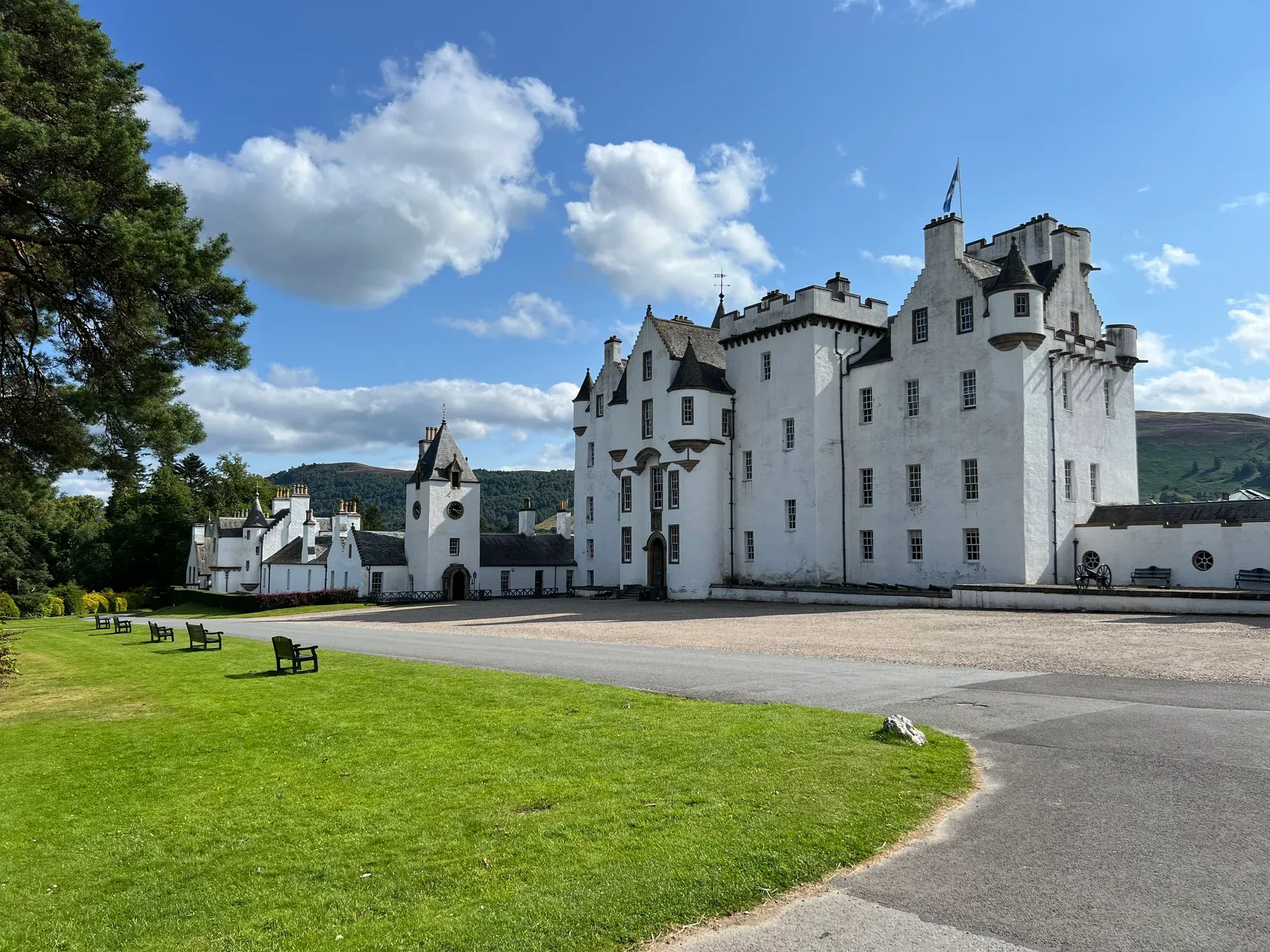
Blair Castle is a landmark Highland estate in Perthshire, associated with the Dukes and Earls of Atholl. Its white exterior, varied architecture and long history reflect centuries of changing ownership, taste and political life in the Highlands.
The castle is also connected with the Atholl Highlanders, the private ceremonial regiment of the Duke of Atholl. Its setting at the edge of the Cairngorms makes it feel both like a historic house and part of a much larger Highland landscape.
Over time, the building acquired a mixture of medieval, Georgian and Victorian character, which is visible in its changing roofline and rooms. That layered appearance helps distinguish Blair from the more overtly military castles on the route. The estate's position on the old road through Perthshire also explains why it has long been a natural stopping point between the Lowlands and the central Highlands.
Whether you choose to admire the exterior and grounds or explore further, the stop adds a different kind of Highland story to a day otherwise centred on lochs, glens and viewpoints.
Admission is not included in the tour price. Entry is optional and depends on opening, ticket availability and the time available during the tour.
Pitlochry is a compact Perthshire town framed by wooded hills and the River Tummel. It developed as a nineteenth-century holiday destination and remains a pleasant place to pause on the journey between the Highlands and Edinburgh.
The town centre is easy to explore independently, with local shops, cafés and short walks nearby. This is flexible free time, allowing the group to choose between refreshments, browsing or a quiet walk rather than following a fixed attraction programme.
Food, drinks, shopping and any activities are at your own choice and expense.
South Queensferry looks across the Firth of Forth to three bridges built in different eras: the red cantilever Forth Bridge, the Forth Road Bridge and the Queensferry Crossing. Together they make one of Scotland's most distinctive engineering skylines.
The Forth Bridge is internationally recognised for its pioneering nineteenth-century design, while the newer crossings show how the estuary has remained an important route into Fife. The waterfront viewpoint gives time to step out, photograph the bridges and enjoy the village setting.
Highland weather and visibility can change quickly, so the view and conditions on the day may vary.
Sights seen along the route
Depending on the route, traffic and available time, you may see some of these landmarks from the vehicle. They are not scheduled visitor stops.
- Linlithgow Palace
- Kelpies
- Stirling Castle
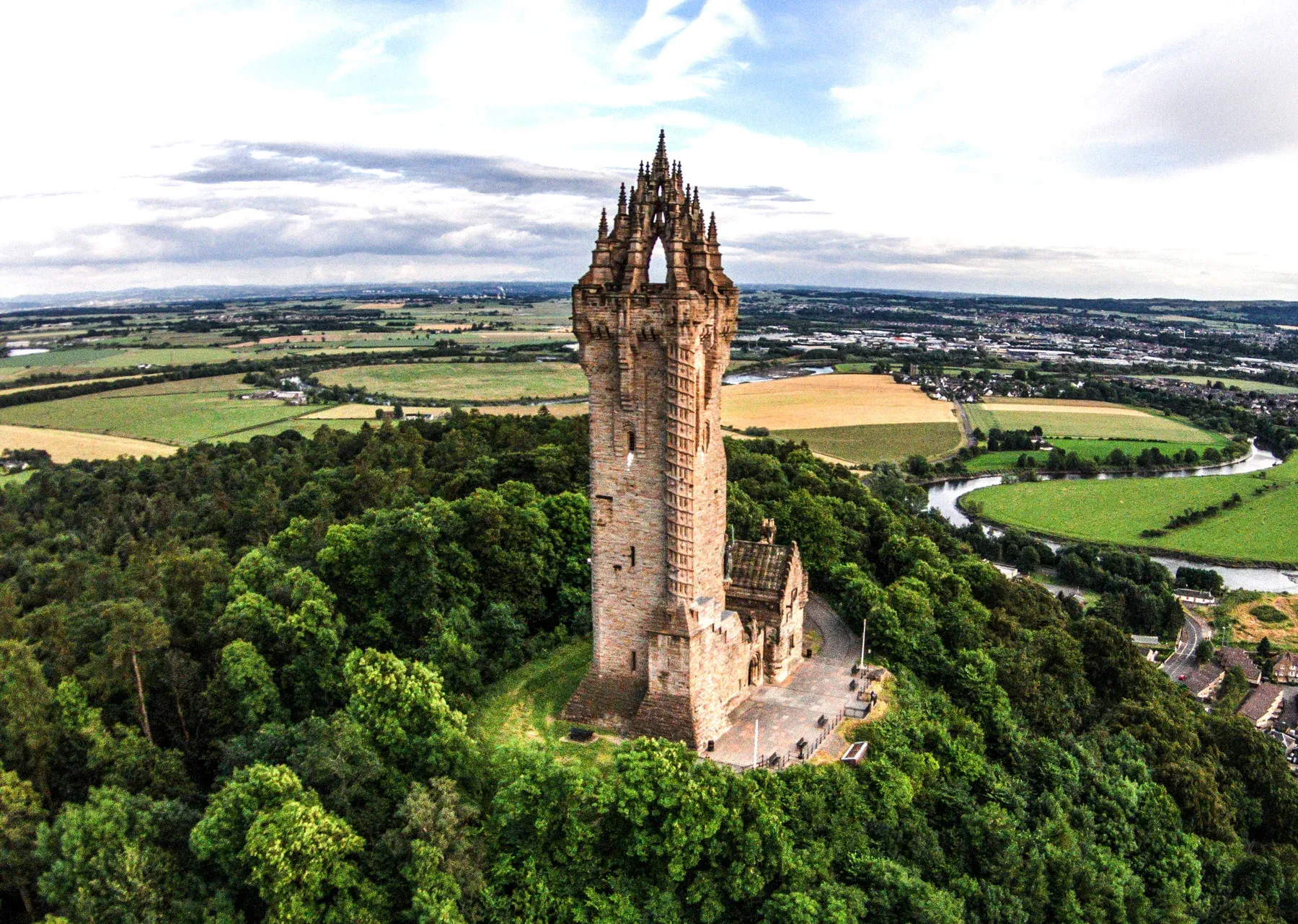
- William Wallace Monument
What's included
- Driver as a guide
- Air-conditioned vehicle
- Private transportation
- Bottled water
- Parking fees
- Appropriate child seats available when requested in advance
Not included
- Admission fees and optional attraction tickets
- Food, drinks, meals, refreshments and tastings
- Gratuities
- Blair Castle and Gardens entry
Admission information
Admission fees and optional attraction tickets are not included. Places with no admission charge may be free to visit; any paid attraction is at your own expense unless a specific booking product explicitly states otherwise.
Pickup and drop-off
Meet at 17 Charlotte Square, Edinburgh, or request pickup and drop-off at another suitable address within Edinburgh. Pickup or drop-off outside Edinburgh is available only by individual agreement.
Important information
- Private day tour; itinerary stops and timings may change.
- Maximum group size is 7 passengers.
- Children are welcome. Appropriate child seats can be provided when requested in advance; customers should give the child's age, approximate weight and required seat type when booking.
- Only service animals are allowed.
- Food, drinks, meals, refreshments and tastings are paid for by the customer unless a specific product explicitly states otherwise.
- Admission fees and optional attraction tickets are paid separately by the customer unless explicitly approved as included.
- Use the wording 'comfortable private transport suitable for your group'; do not guarantee a vehicle model in generic tour wording.
- Public product lists a 07:30 start time.
Cancellation summary
- More than 24 hours before departure: Refund of the amount paid, less the non-refundable payment-processing fee of 3.27% of the tour price.
- Less than 24 hours before departure: No refund.
- No-show: No refund.
- If Ed Private Tours cancels: Full refund of all amounts paid.