Tour overview
A private day in Scotland
Travel from Luss to Inveraray Castle, St Conan's Kirk and Oban Distillery, then return through Glencoe viewpoints, Loch Tulla and Kilmahog, with pass-by views of the Wallace Monument and Stirling Castle. The vertical Oban Distillery photograph is reserved for itinerary or gallery use, not a wide hero or tour card.
At a glance
- Duration: 12 hours
- Group size: Up to 7 passengers
- Private transport: Comfortable private transport suitable for your group.
Edinburgh → Loch Lomond Conservation Village Luss → Inveraray Castle → St Conan’s Kirk → Oban Distillery → Loch Achtriochtan → Three Sisters of Glencoe → Meeting of Three Waters → Glencoe Valley viewpoint → Loch Tulla Viewpoint → Kilmahog → William Wallace Monument → Stirling Castle → Edinburgh
Your route
Itinerary
Open a stop for practical visit details.
Luss is a conservation village on the western shore of Loch Lomond. Its small lanes, stone cottages and waterfront views make it one of the most recognisable settlements around the loch.
The village offers a gentle change of pace after the wider mountain scenery: you can walk down towards the water, look across the loch and explore independently. Its setting also introduces the landscape of Loch Lomond and The Trossachs National Park, where lowland woodland meets Highland hills.
Food, drinks and any activities are at your own choice and expense.
Inveraray Castle is the ancestral home of the Dukes of Argyll, chiefs of Clan Campbell, and stands near the shores of Loch Fyne. Its turreted profile and landscaped grounds make it one of Argyll's most distinctive historic buildings.
The castle is closely tied to the planned town of Inveraray, whose white-fronted buildings and formal layout create a striking contrast with the surrounding loch and hills. Together, town and castle illustrate the influence of one of Scotland's most prominent Highland families.
The present building is a major example of the Gothic Revival style in Scotland, designed to look both romantic and authoritative. Its profile is particularly striking when viewed from the approach to the town, where the loch, hills and carefully planned architecture appear as a single composition.
The stop offers architecture, clan history and lochside scenery in the same setting.
Admission is not included in the tour price. Entry is optional and depends on opening, ticket availability and the time available during the tour.
St Conan's Kirk stands on the shore of Loch Awe and is celebrated for its imaginative, richly detailed stonework. Built in a deliberately eclectic style, it combines medieval-inspired arches, towers and carvings in a setting that feels both intimate and theatrical.
The lochside position is part of its appeal: the church appears against water, woodland and the hills of Argyll. This is a quieter cultural stop, offering time to look at the architecture, take photographs and enjoy a place that differs markedly from Scotland's larger historic monuments.
Access depends on current local arrangements. Please respect any notices displayed on site.
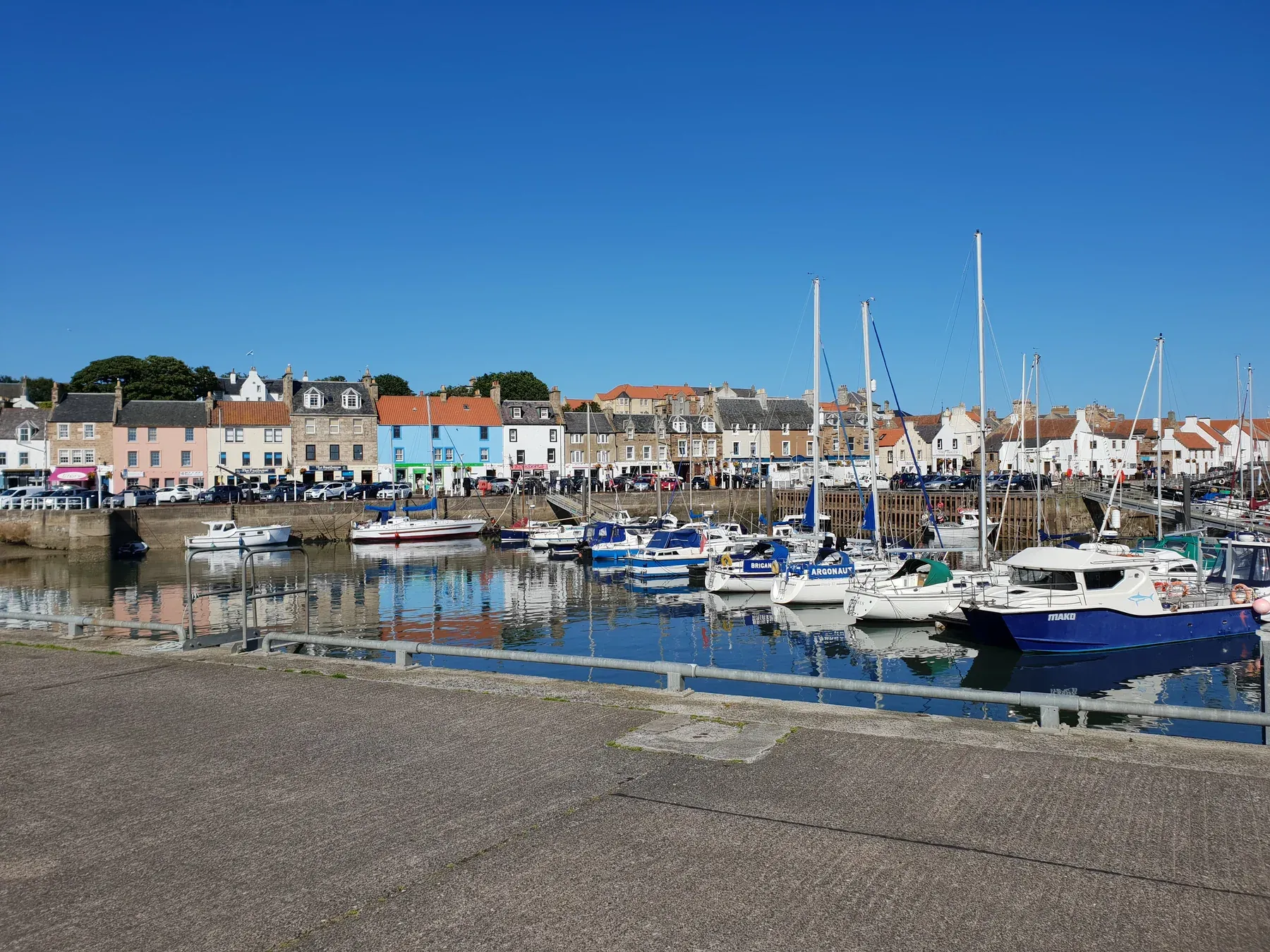
Oban Distillery sits in the centre of the harbour town, woven into the streets rather than set apart in the countryside. Its position reflects Oban's long role as a port and gateway to the Hebrides, where sea travel, fishing and tourism meet.
The distillery provides a focal point for the town's whisky story, while the surrounding waterfront offers time to explore independently. Oban itself is framed by the bay and islands beyond, so the stop can combine the distillery setting with a short walk through one of the west coast's best-known towns.
It adds an urban, maritime perspective to a route that also takes in lochs, glens and Highland viewpoints.
Oban grew rapidly in the nineteenth century as a port and resort, and its harbour still faces routes to islands including Mull and Kerrera. That maritime setting is essential to the town's identity. Looking from the central streets towards the bay gives a sense of why Oban is often described as a gateway to the isles, even on a day tour that remains on the mainland.
Formal tours, tastings, purchases and any admission are not included unless a booking product expressly confirms them. Availability may vary.
Loch Achtriochtan sits in the heart of Glencoe, surrounded by steep mountains and open moorland. In calm conditions the water can reflect the ridges, while in rain or mist it takes on a quieter, more atmospheric character.
This short stop focuses on the relationship between water, rock and open ground that defines much of the glen. It offers a closer lochside perspective than the higher viewpoints and time for photographs without turning the day into a long walk.
Highland weather and visibility can change quickly, so the view and conditions on the day may vary.
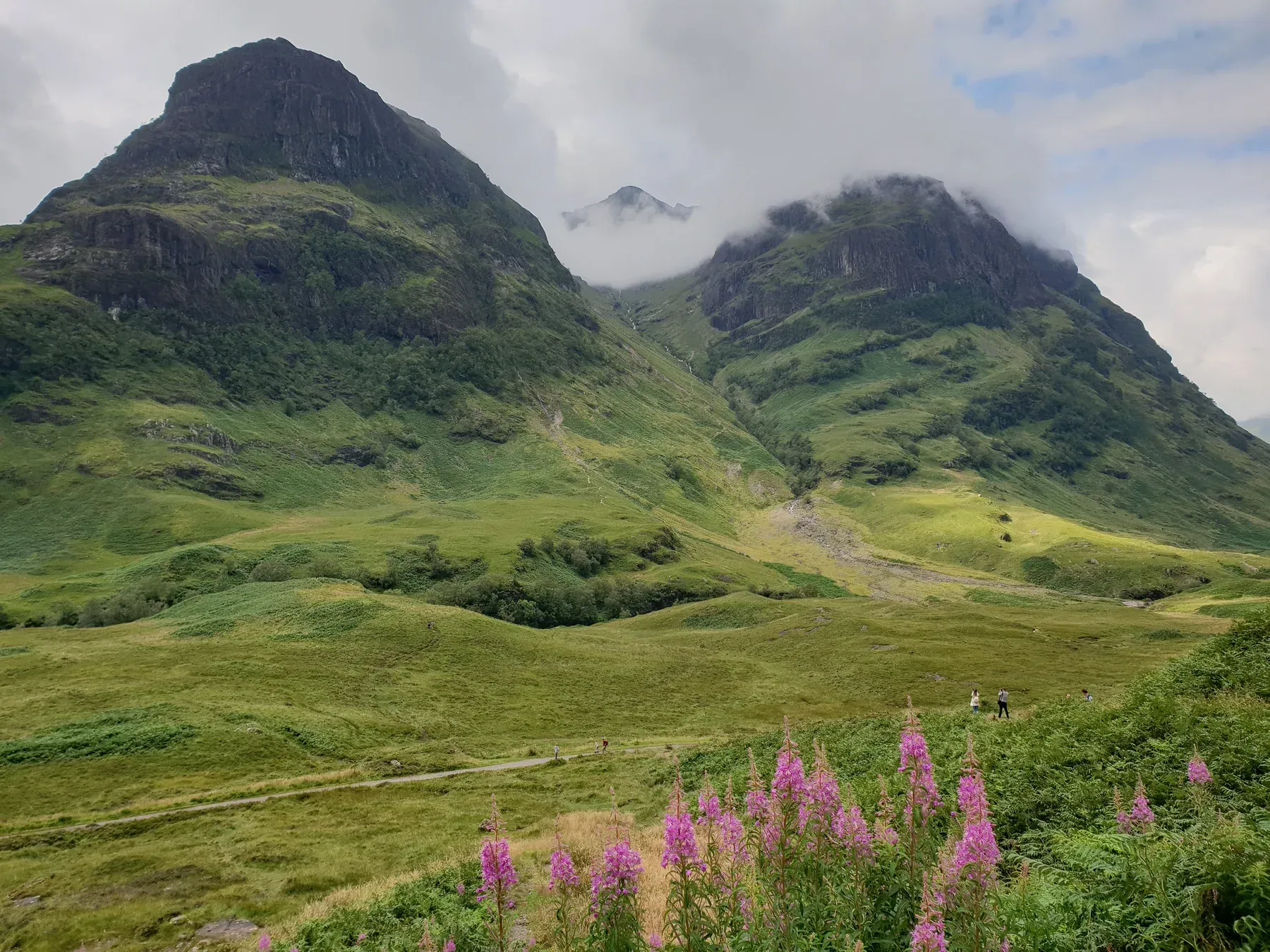
The Three Sisters are three prominent ridges on the northern side of Glencoe, beneath the wider massif of Bidean nam Bian. Their sharp profiles and the broad sweep of the glen make this one of the most photographed Highland views.
The viewpoint reveals the contrast between rough mountain slopes and the open valley below. It is a chance to pause, take photographs and hear context about the landscape from your driver-guide before the road continues west.
Highland weather and visibility can change quickly, so the view and conditions on the day may vary.
The Meeting of Three Waters is a well-known point in Glencoe where streams descend from the surrounding slopes and meet near the valley floor. Waterfalls can be particularly striking after rain, when the contours of the mountains become more apparent.
Set beneath high ridges, it provides a close-up sense of the glen's geology and scale. There is time to step out, take photographs and appreciate a quieter detail of the landscape before continuing through Glencoe.
Highland weather and visibility can change quickly, so the view and conditions on the day may vary.
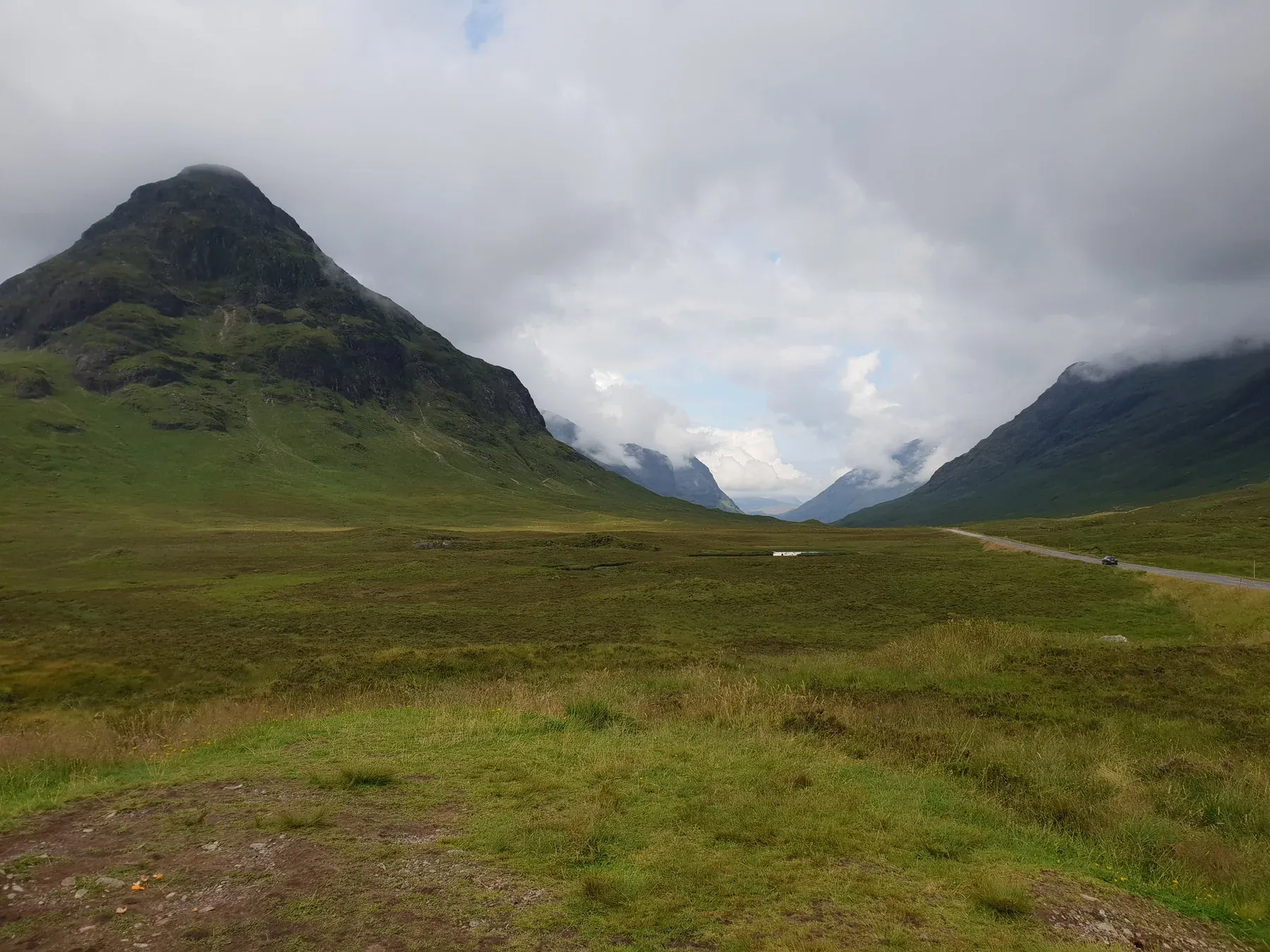
Glencoe is one of Scotland's most recognisable Highland landscapes. Its broad valley was shaped by volcanic activity and later glaciers, leaving steep ridges, dark rock faces and a dramatic sense of enclosure.
The glen is also associated with the Massacre of Glencoe in 1692, a tragic episode in Scottish history that gives the landscape an added historical resonance. From a suitable roadside viewpoint, you can take photographs and see how the mountains, burns and moorland fit together. It is a proper scenic pause rather than simply a landmark viewed through the vehicle window.
Highland weather and visibility can change quickly, so the view and conditions on the day may vary.
Loch Tulla lies at the western edge of Rannoch Moor, a vast sweep of peatland, water and low vegetation between the Trossachs and Glencoe. The viewpoint opens out across the loch towards hills that can look entirely different as the light changes.
It is a useful first sense of Highland scale: open moorland, scattered lochans and long horizons rather than the enclosed glens to come. This is a short photography and scenery stop, with time to step out and take in the setting.
Highland weather and visibility can change quickly, so the view and conditions on the day may vary.
Kilmahog sits at the gateway to the Trossachs, where wooded hills and open farmland begin to replace the city landscape. The stop is closely associated with the nearby Trossachs Woollen Mill, a long-established place for Scottish knitwear, tartan and gifts.
Highland cattle are one of the memorable sights of this area. Their long coats and broad horns have made them an enduring symbol of rural Scotland, and the stop offers a gentle introduction to the landscapes ahead. There is time to stretch your legs, take photographs and browse independently before the route continues north.
Highland cattle sightings and access cannot be guaranteed. Please follow any notices at the location; feeding or touching animals is not promised.
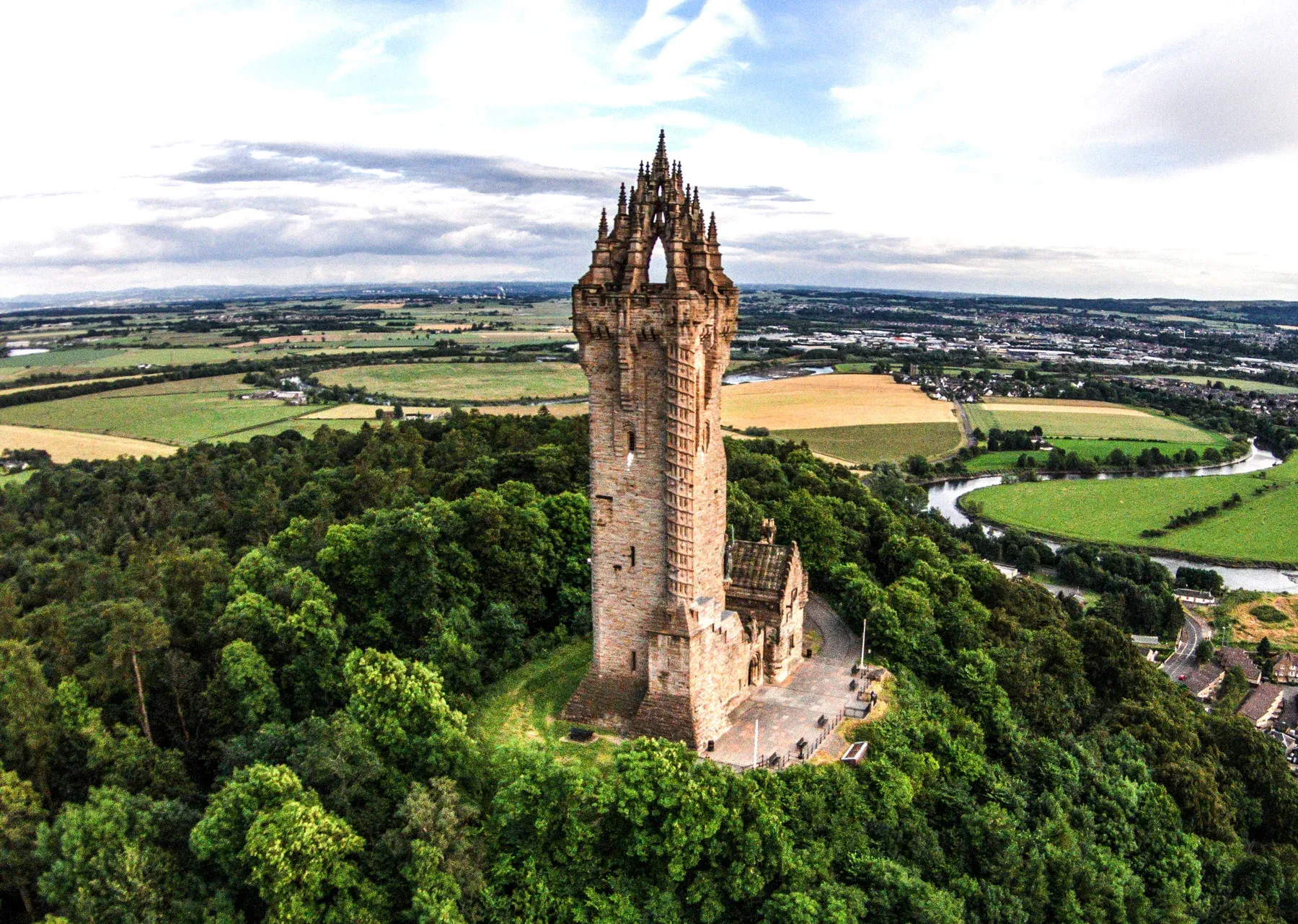
The National Wallace Monument rises from Abbey Craig above Stirling, a volcanic outcrop with wide views over the Forth valley. Built in the Victorian Gothic style, the tower commemorates Sir William Wallace and his association with the Scottish victory at the Battle of Stirling Bridge.
Its location makes the monument visible from across the surrounding landscape, while its exhibition spaces and tower tell the story of Wallace and the period in which he lived. The setting is as important as the building: it looks towards the ground where medieval armies fought for control of central Scotland.
The stop offers a strong visual counterpoint to nearby Stirling Castle and helps connect the region's scenery with its national history.
The monument was built during the nineteenth-century revival of interest in Wallace as a national figure. Its tall sandstone form was deliberately placed where it could be seen from afar, turning Abbey Craig into a visual memorial as well as a viewpoint. The combination of Victorian architecture, medieval history and open landscape makes it one of central Scotland's most distinctive landmarks.
Admission is not included in the tour price. Entry is optional and depends on opening, ticket availability and the time available during the tour.
Stirling Castle occupies Castle Hill, a volcanic crag above the River Forth, in one of Scotland's most strategic locations. For centuries it controlled routes between the Highlands and Lowlands and became a major royal and military stronghold.
Within the castle, the Renaissance royal palace and Great Hall reflect its importance to the Stewart monarchs. Mary, Queen of Scots was crowned here, and the castle's position helps explain why Stirling appears so often in Scotland's political and military history.
The views from the hill extend across central Scotland towards the Forth valley, linking the architecture of the castle to the landscape it once commanded.
The castle's history includes moments of celebration as well as conflict. Its great buildings were designed to display royal authority and courtly culture, while the defences reflect the uncertainty of a strategically important frontier. Seeing the castle from Castle Hill helps make those two roles—royal residence and commanding fortress—easy to understand.
Admission is not included in the tour price. Entry is optional and depends on opening, ticket availability and the time available during the tour.
What's included
- Driver as a guide
- Air-conditioned vehicle
- Private transportation
- Bottled water
- Parking fees
- Appropriate child seats available when requested in advance
Not included
- Admission fees and optional attraction tickets
- Food, drinks, meals, refreshments and tastings
- Gratuities
- Oban Distillery tour
- Inveraray Castle entry
Admission information
Admission fees and optional attraction tickets are not included. Places with no admission charge may be free to visit; any paid attraction is at your own expense unless a specific booking product explicitly states otherwise.
Pickup and drop-off
Meet at 17 Charlotte Square, Edinburgh, or request pickup and drop-off at another suitable address within Edinburgh. Pickup or drop-off outside Edinburgh is available only by individual agreement.
Important information
- Private day tour; itinerary stops and timings may change.
- Maximum group size is 7 passengers.
- Children are welcome. Appropriate child seats can be provided when requested in advance; customers should give the child's age, approximate weight and required seat type when booking.
- Only service animals are allowed.
- Food, drinks, meals, refreshments and tastings are paid for by the customer unless a specific product explicitly states otherwise.
- Admission fees and optional attraction tickets are paid separately by the customer unless explicitly approved as included.
- Use the wording 'comfortable private transport suitable for your group'; do not guarantee a vehicle model in generic tour wording.
- Public product lists a 07:30 start time.
Cancellation summary
- More than 24 hours before departure: Refund of the amount paid, less the non-refundable payment-processing fee of 3.27% of the tour price.
- Less than 24 hours before departure: No refund.
- No-show: No refund.
- If Ed Private Tours cancels: Full refund of all amounts paid.